Jordan

Since 2003, Mercy Corps has worked in Jordan to expand clean water access, strengthen youth and women’s civic participation, and boost economic stability for both Jordanians and refugees. In 2025, Mercy Corps reached nearly 42,000 people across the country.
The context
Jordan is one of the most water-scarce countries in the world. Climate change and rapid population growth have pushed water supplies far below what people need. Today, the amount of water available per person is well under the global benchmark for extreme water scarcity, according to the UN.
With climate change driving higher temperatures and less rainfall, Jordan’s already limited resources are under increasing strain. Intensifying droughts, heatwaves, flash floods, and desertification now threaten water security, food production, public health, and economic stability. Additionally, expanding access to renewable energy remains critical for sustainable development and climate resilience.
After years of conflict across the region, Jordan continues to host refugees from Syria and neighboring countries. Both refugees and the Jordanian host communities continue to face high costs of living and limited access to education, healthcare, and other essential services.
The World Bank reports more than 46% of Jordanian youth are unemployed, despite being among the most educated in the region, as job opportunities remain limited. Additionally, women make up only 14% of the formal labor force—one of the lowest rates in the world.
Our impact
Through partnerships with local governments and organizations, Mercy Corps supports communities as they build economically secure and more peaceful futures. Our programs make an impact across these areas:
Supporting sustainable practices to tackle climate challenges
Mercy Corps helps communities across Jordan build climate resilience by addressing urgent needs today while also preparing for future shocks. For those who depend on healthy soil and predictable rains, our programs provide technical training to improve livelihoods while also developing recovery responses should a climate challenge arise.


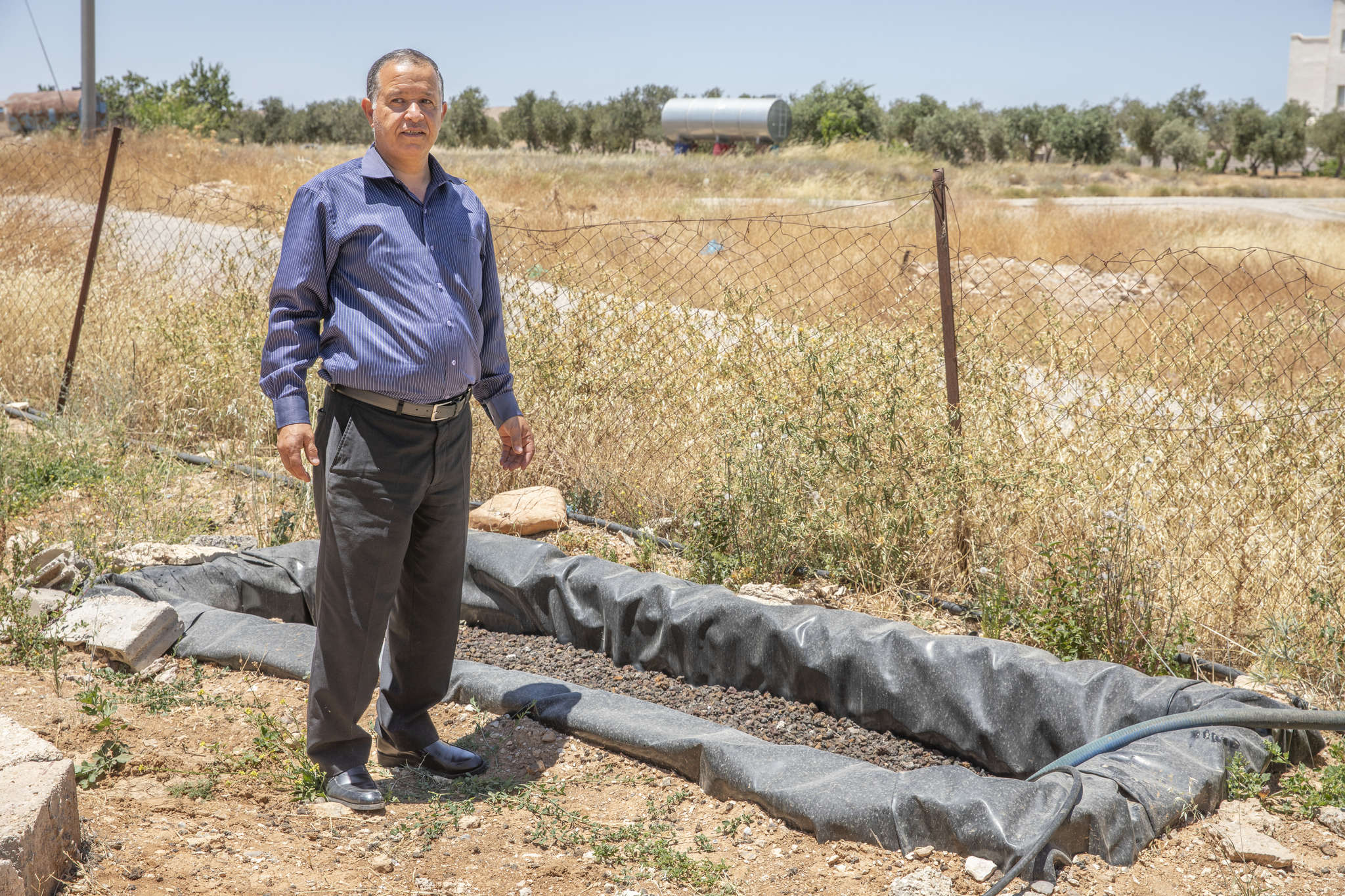
In Al Zubaireya, farmers adopted water-saving techniques and agricultural best practices to improve the quality and quantity of their crops. For example, farmers received grants to upgrade outdated irrigation systems so they can use less water while tending to more crops.

Mercy Corps is partnering with local leaders and organizations to better prepare for and cope with extreme weather events. By building awareness, communities are incorporating preparedness and response capabilities so they can recover quicker after climate-related events like flash floods. Mercy Corps is also connecting local businesses and governments to encourage more investment in practical disaster risk reduction.
We work with local leaders in Jordan to protect natural resources, plan for a changing climate, and expand access to reliable, renewable energy. By supporting policies that put communities’ needs first, we’re helping build systems that safeguard people’s livelihoods, strengthen food security, and create a safer future for generations to come.
Strengthening resilient livelihoods and economic opportunities
Small businesses and entrepreneurs are the backbone of Jordan’s economy, employing 60% of the private sector workforce. We’re working to build a stronger, more diverse economy that helps small businesses grow and create jobs.

Mercy Corps helps local business owners strengthen their skills by providing training in digital marketing, business, and financial management. We support entrepreneurs in launching e-stores, opening the door to new customers and opportunities. In Zaatari Camp, home to the largest Syrian refugee population, Mercy Corps is training shop owners in practical energy skills, from efficiency tips to electrical safety and cost-saving upgrades. These efforts help businesses cut their energy costs, stay safer, and operate more sustainably while boosting their livelihoods.


Mercy Corps’ livelihood programs prioritizes youth, women, and displaced populations—groups often left at the margins of economic growth. Our inclusive livelihood programs provide specialty training for women to enter the workforce, while also delivering grants to small business owners to fund infrastructure improvement and purchase equipment. Mercy Corps’ comprehensive approach gives women the skills they need to thrive in their jobs and helps keep the small businesses that employ them stable and sustainable.
Promoting peaceful solutions for all communities
Our approach to peace and good governance emphasizes dialogue, collaboration, and trust-building between civil society, local leaders, and government institutions. We are supporting communities—particularly youth, women, refugees and other marginalized groups—to build resilience and engage meaningfully in shaping their futures.
In Zaatari Camp, Mercy Corps provides community safe spaces where Syrian refugees can find support and relief to cope with psychosocial stress. These safe spaces are also an essential part of our livelihood programs. When people have support for their emotional well-being, they’re better able to focus on rebuilding their lives and finding work to support their families.


Young Syrians in Zaatari Camp can join activities like wall climbing and football, helping them build confidence, communication skills, and teamwork. Football matches with Jordanian peers also strengthen social ties between refugee and host communities. Together, these activities create a supportive environment where young people can grow, feel accepted, and move toward a safer, more hopeful future.