Sowing hope in Syria: Digital cash supports farmers to rebuild livelihoods

Update: Mercy Corps' ground-breaking use of digital wallets to provide instant cash transfers to families in crisis has also been featured in the New York Times [paywall].
“[Our home] was completely looted. There was nothing left. The windows were gone, and one of the exterior walls was destroyed,” said Kareem*, who recently returned to Qalaat al-Madiq with his family. “Still, I was grateful to be home.”
After withstanding years of conflict in the region, Kareem and his family fled their home to a camp for displaced communities when he was injured by shelling in 2019. He had been on his motorbike when a mortar explosion severely wounded his leg, leading to an amputation.

“It was not the first time the town had seen conflict, but nothing had ever been as violent and destructive as it was in 2019,” said Kareem. “The town was almost entirely destroyed.” Kareem and his family were a part of the more than 7 million people who had been displaced within Syria, along with over 6 million who fled the country due to violence since 2011, according to the UN.
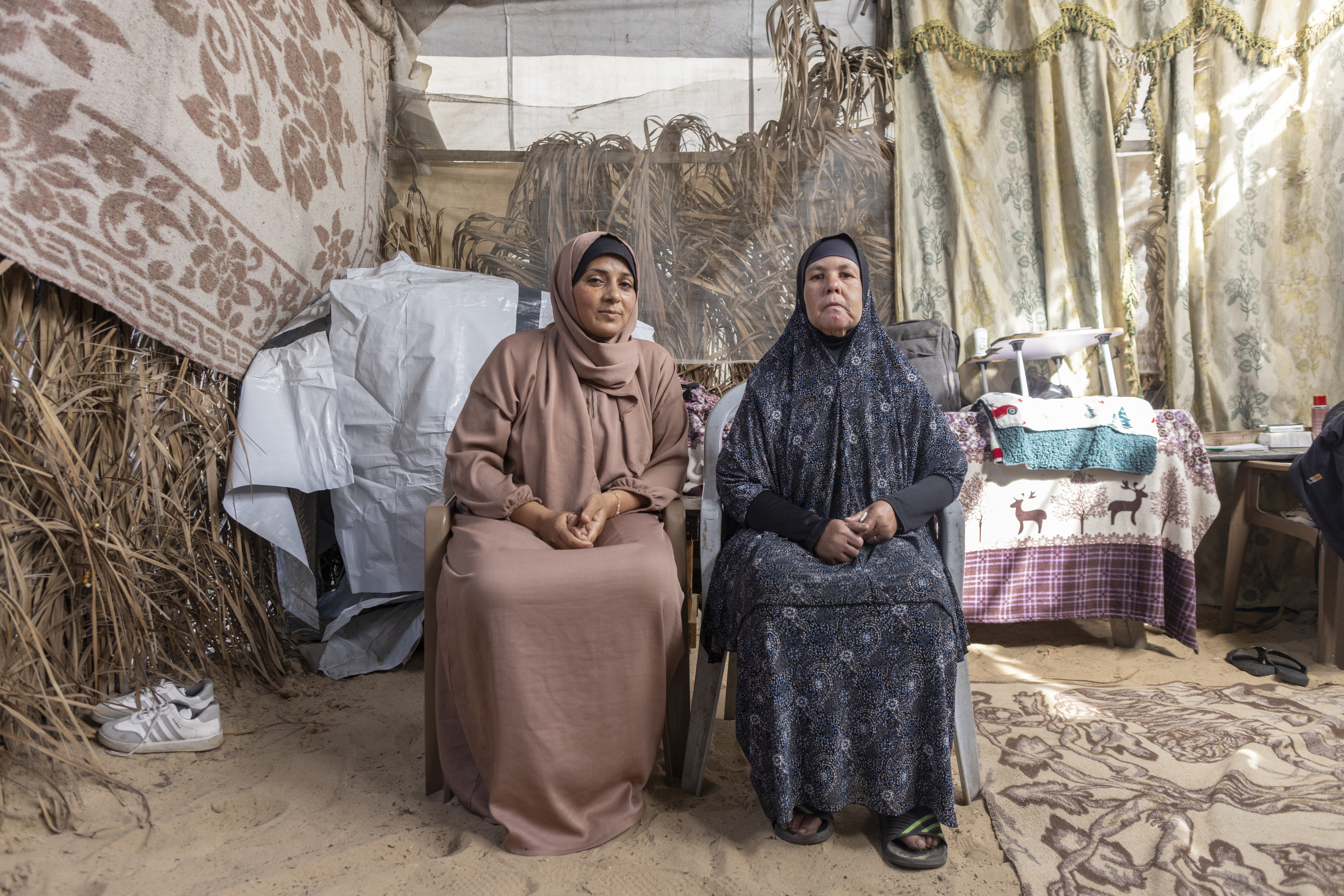
Life at the camp was challenging. “It was difficult for all of us, mentally, physically, and financially. Daily life was tough, water was hard to get, and we struggled with expenses,” said Kareem. They spent many of the latter years living in a shelter made of two small cement rooms fitted with a tarp roof. Beneath the plastic tarp, the shelter baked in the summers and leaked with frigid rain in the winters.
No matter how long you stay away, nowhere else feels like home.
Kareem, Farmer in Syria

This December marks a year since Syria’s political transition, signs of recovery and renewal are beginning to emerge. After fourteen years of violence and displacement, families who have endured harsh camp conditions are now determined to return home and rebuild.
“This is our home,” said Kareem. “No matter how long you stay away, nowhere else feels like home. Life in the camp was very difficult. And now, thank God, the situation here is safer, so we returned.”
But returning is not without risk. Across much of Northeast and Northwest Syria, farms and fields are still littered with unexploded bombs and landmines left behind by years of fighting—making it dangerous for families to step back onto their land, let alone tilling the soil to begin planting again.
Back in his village, Kareem found their abandoned land covered in weeds. “The soil was dry and hard. It looked nothing like the field I had left behind. I had to leave all my equipment behind when we fled. When I returned, everything was gone.”
Kareem had grown up on this farm, learning how to cultivate a livelihood from an early age by watching his father and grandfather sowing the same plot of land. He is now working as much as he can to restore the 1.5-acre field so that it may once again grow molokhia (a dense, leafy green), soybeans, and wheat.
Delivering digital cash to help farmers grow brighter futures
Since the conflict began in 2011, Syria’s economy and banks had collapsed. For humanitarian organizations like Mercy Corps, traditional processes to transfer money to participants are very costly and leave cash and currency exposed to potential security issues. Amid these challenges, new tools have become essential for getting help into people’s hands.
By delivering and exploring the use and benefits of blockchain-based stablecoins, a regulated form of digital currency, Mercy Corps has reached more than 1,400 people in North Syria to help families receive assistance quickly, safely, and at lower cost. Our cash aid is coupled with assistance in safely finding and removing land mines and other explosive hazards that remain on farms and fields, helping farmers and agricultural business owners regain their livelihoods and return to their land with confidence.
In rural Hama, which includes Kareem’s small town of Qalaat al-Madiq, Mercy Corps teams estimated that more than 70% of returned farmers lost their crops and 65% weren’t able to find or afford essential supplies. Secure digital cash transfers help farmers receive funds quickly so they can buy what they need to plant for the next harvest.
Supporting farmers is key to reviving local economies. Their harvests restore their family’s income, fuel local markets, feed families, and make it possible for others to return and rebuild. Digital cash plays an important role in this recovery, helping money move quickly through local markets, connecting people to financial services, and laying the groundwork for stronger economies.

Kareem will use the cash aid to install a new, more efficient irrigation and sprinkler system. He plans to sell his crops once they’re ready to be harvested and reinvest the profits back into the farm and homestead. “I hope to use that income to purchase what I need, little by little,” said Kareem.
Since returning to Qalaat al-Madiq in the spring, Kareem has worked tirelessly to repair his home as well as the farmland. “I am still working on it. Some local shops helped me by letting me pay in installments. This room is finished, the kids’ room has only lights now, and the third room is still untouched. The exterior walls are damaged, but I fixed the essentials so we could move in.”
Even with so much hard work ahead of him, Kareem remains optimistic about the future and his family. “I live for my children. I want them to have a better life,” he said. “I just want to live with dignity and not rely on others.”
*Name has been changed