India
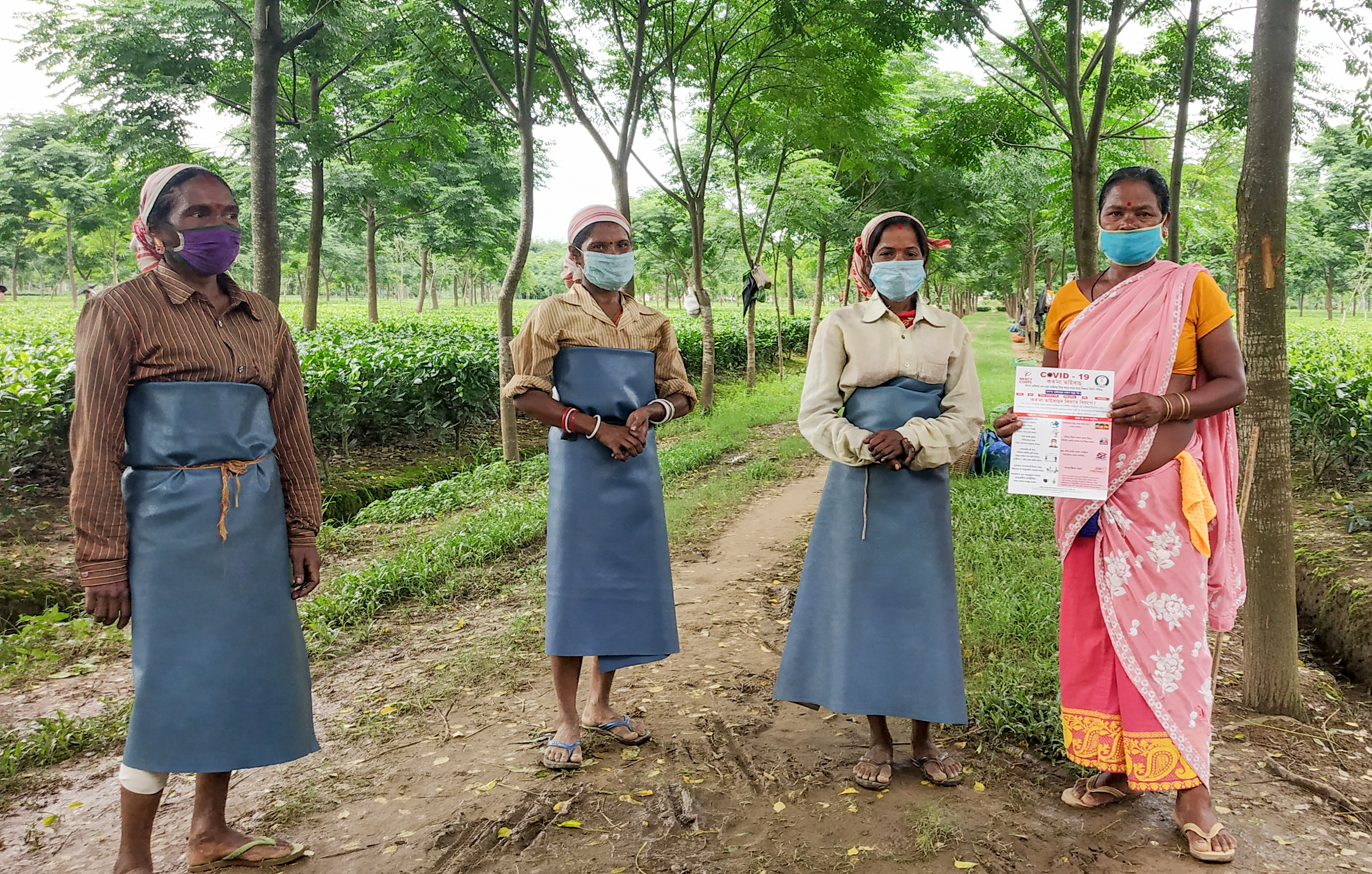
Thousands of Indian families have worked and lived for more than a century behind the fences of tea estates. Today, driven by need and inspired by ideas, they are remaking a world too often governed by colonial strictures.
Latest News
Blog Post: Posted December 6, 2009, 11:16 am by Usmaan Ahmad
Gearing up for the climate change concert
Country: India
Topics: Climate Change
Hi everybody! While the upcoming Mercy Corps "Say It's Possible" Climate Change Concert with Terra Naomi is no ordinary concert, no concert would be complete without its posters and radio ads.
Ahead of the concert, I thought I'd share the poster (at right) and radio spot that Terra recorded with Big 92.7 FM which is the radio partner in Kashmir for this event. The radio spot is part of Mercy Corps' effort to raise local awareness about climate change through this event. The hope is that this event will educate the Kashmiri public which can be a basis of practical efforts. On December 7, Big 92.7 FM will be broadcasting Terra's concert throughout the Kashmir Valley and it will be playing the new Kashmiri-English version "Say It's Possible" as soon as Terra, Waheed Jeelani and other Kashmiri artists record it in a studio in Srinagar.
We'll have a lot more news, photos and video soon!
Posted November 25, 2009
Say it's Possible
Country: India
Topics: Climate Change
Say It’s Possible
Join our efforts to fight climate change on behalf of the world's poor
On Dec. 7, while the world’s leaders gather in Copenhagen, YouTube sensation Terra Naomi will perform a special concert in the ecologically sensitive Kashmir Valley. You can help fight climate change by helping Mercy Corps mitigate the worst effects of global warming and create green jobs in the world's poorest places.
Recent Blog Posts on mercycorps.org
Blog Post: Posted December 14, 2009, 9:32 pm by Dory McIntosh
Seminal moments in Copenhagen
Topics: Climate Change
COP15 (UN Climate Change Conference) has had its peaks and troughs. The troughs have related to both the process and the logistics — the temporary withdrawal of the support of African nations sent almost palpable frissons of panic around the negotiating room. For a while, it seemed that there really could be a possibility that we would all go home with no agreement in place. Luckily, all were back at the negotiating table a few hours later, but it felt like a close call.

Al Gore speaks at a COP 15 side event entitled "Greenland Ice Sheet - Melting Snow and Ice: Calls for Action." Photo: WIDJA (flickr)
The logistical troughs were more immediate, but nonetheless uncomfortable. The atrocious administrative failures left many out in the cold today — literally. Hundreds waited up to ten hours in freezing temperatures, like cattle behind the barriers, to gain access to the Bella Center. Many had to leave without ever gaining access — despite having prior registration for the event.
However, for those who made it through the barriers, there were some real highlights with Al Gore’s presentation being one of those — despite the desperate message that he and his fellow panellists were portraying. Both Al Gore and the scientists who preceded him stressed that the effects of glacier and ice melt are going to far exceed the earlier UNFCCC predictions. Not only are the Greenland ice cap and Western Antarctica melting far faster than was previously thought, but the Himalayan glaciers are melting at a rate that is placing the lives of more than a billon people in jeopardy. Sea level rises of around one meter are predicted by the end of the century, which would displace an estimated 100 million people from their homes and livelihoods. To put this in context, we were told that the negotiators were working within the parameters of a 4 degree rise in temperature by the end of the century.
For most countries this is a disastrous scenario, but for developing countries it is the stuff of nightmares. It is a nightmare that has millions of people fleeing their homes — either because of conflict or because of diminishing resources.
For Mercy Corps these are urgent times, but our response has to be measured and appropriate. The very urgency of the situation makes it all the more important that funding and other resources are allocated where they can have the highest impact and most immediate effect.
Blog Post: Posted December 14, 2009, 6:46 am by Jim Jarvie
Climate change adaptation — making sense of the data maze
Topics: Climate Change
On December 14 at 9 A.M. here at the Climate Change Conference here in Copenhagen, Mercy Corps was part of a presentation hosted by USAID, as part of the U.S. delegation tent. Our presentation was part of the launch of Climate One Stop, a website acting as a one-stop shop for climate facts and figures.
The website brings together heavy duty data providers like NASA and the National Oceanic and Atmospheric Administration (NOAA), data consolidators like the United Nations Development Programme and World Resources Institute, and data users like Mercy Corps and our sister agencies. You can read the NASA press release here and visit our startup site at http://climateonestop.net. Its basic task is to help us filter out and select quality, applicable data and information from the blossoming number of climate-related news feeds, then use that information to help the communities where we work.
Why has Mercy Corps been placing an emphasis on this? The starting point is our mission: helping people build secure, productive and just communities. A dilemma is that doing this successfully means taking a long-term view, which increasingly requires taking climate change adaption into account. But, in transitional countries where short-term needs are paramount, making the case for thinking ahead is tricky. It needs compelling data and argument, and this is where Climate One Stop comes into play.
Let me give some examples from where we have boots on the ground.
Take Afghanistan where we naturally think of the ongoing conflict, violence and need for stabilization. Obviously these challenges require the focused attention and resources currently being applied. But what happens when short-term objectives are met? A recent report to DFID, the United Kingdom's development agency, recently said "At present, climate change is not a consideration into the national or sectoral plans of the Government of Afghanistan, despite it presenting a significant threat to cross sectoral development."
But Afghanistan is literally running dry. That impacts agriculture and will therefore reduce food security. Unless we take that into account during short-term stabilization measures, how long will the benefits of any short-term gain last? We need reliable data to share with communities and governments to help them address long-term environmental and climate threats needing urgent consideration to bolster successes in security. We need reliable data to show stakeholders and partners like the Government of Afghanistan what is happening, and what needs to be done.

Mercy Corps and colleague organizations need solid, reliable data to share with communities and governments to help them address long-term environmental and climate threats.
In Indonesia, Mercy Corps has been active in helping urban poverty reduction. More than 50 percent of the world's population are in cities that concentrate squalor and suffering. Yet, as we help people move forward in megacities like Jakarta, the communities we work with are increasingly hit by floods from increasing numbers of storms with strengthening intensity, and now face rising sea levels. We need reliable data to best predict how strongly climate change will worsen current hazards and set about planning responses with communities and government. As in Afghanistan, we need to merge short-term response with informed, long-term programming and protection of the legacy of our projects.
Finally, consider the disasters we respond to like the tsunami in Indonesia's Aceh Province and Sri Lanka, and the more recent earthquake that hit the western part of Indonesia's Sumatra Island. These areas suffered the unimaginable consequences of natural, rapid-onset catastrophe. Yet, as they are coastally located, they are certain to also suffer the impact of human-based, slow-onset disasters from climate impact, including rising sea levels and storms.
When we respond to immediate disaster, we hope to put in place disaster risk reduction strategies to protect people from future, similar events. Now we realize we need to incorporate the threat from the gathering tide of climate risks.
Areas as diverse as conflict states, peaceful urban centers and disaster sites all need to start thinking about climate adaptation to secure long-term stability. Yet to do that, solid data from multiple sources needs to be considered and applied. The work at Climate One Stop gives us a head start. This is why Mercy Corps supports it. We hope that you will too.
Blog Post: Posted December 11, 2009, 4:09 pm by Jim Jarvie
People — and worlds — converge in Copenhagen
Topics: Climate Change
The UN Climate Change Conference has started in Copenhagen, and it is overwhelming. Bella Center, an efficient and vast venue, is chockablock with the 15,000 people it can hold — amid rumors that more than 40,000 people have registered. Security is smooth and polite. Among the cavernous halls and corridors, myriad Internet spots and meeting rooms, the hosting is friendly, unflustered and chirpy; most first timers to Denmark are thinking of returning one day for a holiday to really see the place properly.
The flow of humanity, from almost every nation on Earth — women and men from seemingly every ethnicity, religion, age group on the planet — flow past each other from event to meeting to rest stop at a frenetic pace. It brings home the message that, whatever the outcome of whatever form of agreement emerges from this conference, climate change as a threat unites us as no other in history.
This is a historic event.
Two parallel universes seem to exist here. The negotiators, between the forums and country booths to which they retire to regroup and head out again, exist in the same space but barely the same context as the plethora of side events that run across the Bella Center and other nearby venue spots in Copenhagen. The world outside of the conference center has a better overview of the deals and promises, raised hopes and disappointments than those in the side events.
The side events arise from non-governmental organizations (NGOs), campaigners, practitioners and others from civil society involved in the climate debate, as well as the actions already being taken to counter its impacts across the world.
Mercy Corps was directly involved in one of these today. Pramita Harjati, an urban planner from our Indonesia program, presented her work with ACCCRN (the Asian Cities Climate Change Resilience Network). ACCCRN — funded by the Rockefeller Foundation — joins us with sister programs in India, Thailand and Vietnam. Together, they share experiences in analyzing how the challenges that the urban poor already face will be exacerbated by climate change. They discuss how they work with government and the private sector to find solutions.
Pramita talked about how increased storm frequency and intensity have immediate impacts on human life and — in the longer term — their livelihoods as houses are damaged and shrimp and fish farms are destroyed. Other members of the network and the wider audience then heard complementary reports from India about how in Surat, the diamond and textile industries can close for extended periods because workers lose their homes and belongings to flooding. And then we heard similar tales from Vietnam.
It was a microcosm of what these side events are about. Numerous small conferences sharing reports of climate impacts and possible solutions across sectors including government, the private sector and agencies like Mercy Corps.
Together, these events represent the collective knowledge of millions of people, and give voice for advocacy for the negotiators to come to a deal that sets the world on a direction to take on the climate challenge we have created for ourselves. These parallel universes may merge yet.
Blog Post: Posted December 9, 2009, 5:18 pm by Chelsea Wieber
Video: Terra Naomi sings to support Mercy Corps' climate change programs
Terra Naomi was interviewed by CNN-IBN about her climate change concert in Kashmir. Watch the video to see a clip of Terra singing "Say it's Possible" in the snow!
Blog Post: Posted December 6, 2009, 11:16 am by Usmaan Ahmad
Gearing up for the climate change concert
Country: India
Topics: Climate Change
Hi everybody! While the upcoming Mercy Corps "Say It's Possible" Climate Change Concert with Terra Naomi is no ordinary concert, no concert would be complete without its posters and radio ads.
Ahead of the concert, I thought I'd share the poster (at right) and radio spot that Terra recorded with Big 92.7 FM which is the radio partner in Kashmir for this event. The radio spot is part of Mercy Corps' effort to raise local awareness about climate change through this event. The hope is that this event will educate the Kashmiri public which can be a basis of practical efforts. On December 7, Big 92.7 FM will be broadcasting Terra's concert throughout the Kashmir Valley and it will be playing the new Kashmiri-English version "Say It's Possible" as soon as Terra, Waheed Jeelani and other Kashmiri artists record it in a studio in Srinagar.
We'll have a lot more news, photos and video soon!
Blog Post: Posted December 4, 2009, 12:25 pm by Usmaan Ahmad
Video: New documentary on the impact of climate change in the Kashmir Valley
Good morning!
The preparations are in full swing for Terra’s visit and the Mercy Corps “Say It’s Possible” Climate Change Concert that will take place here in Kashmir on Dec. 7. So many have stepped forward and volunteered their talent and time with the hope that this effort will help educate the public across the globe and somehow motivate people and their governments to commit themselves to taking Climate Change seriously at Copenhagen and beyond.
In particular, the local artist community in Kashmir is playing a leading role in supporting this awareness-raising event by developing a Kashmiri-English version of Terra’s inspiring song “Say It’s Possible,” and composing a traditional Kashmiri musical orchestra to back up Terra and the Kashmiri singers who will be performing with her.
In addition to Terra’s musical performance, the event will feature the premiere of a new documentary film that takes a close look at some of the observable impacts of climate change that are taking place in the Kashmir Valley. The film is titled Global Warming — A Catastrophe in the Making, and has been made by Shafqat Habib and Shahid Rasool of the Educational Multi-Media Research Center (EMMRC) at the University of Kashmir.
With stunning views of the Himalayan vistas in Kashmir, this documentary features some leading scientists, including Dr. Shakil Romshoo, a glaciologist at the University of Kashmir who has been conducting research on glacial retreat in the Himalaya as a result of global warming. The film looks closely at how climate change is already affecting the livelihoods of some of the most vulnerable sections of the Kashmiri community and explores what the future holds for this region if the world is not able to muster the political will needed to reverse the current trends.
While the audience in Kashmir will get to see the premiere of this film on the big screen at the Climate Change Concert on December 7, Mercy Corps is pleased to host the online premiere of this film right here, right now.
This online premiere is made possible by the dedicated filmmakers, Shafqat Habib and Shahid Rasool, and through official collaboration of EMMRC (University of Kashmir) in Mercy Corps’ “Say It’s Possible” Climate Change Concert with Terra Naomi in Kashmir.
Also, if you haven’t already watched it on YouTube, click here to watch the trailer for another documentary by a U.S. flimmaker called, Kashmir: On Thin Ice, coming out next year. This film highlights a growing concern that climate change might increase tensions in South Asia as Kashmir’s water resources become scarce.
I’ll be sharing a whole lot more info soon — next time focusing on the good news, i.e. what can be done at the local and global level to avert the climate-induced human catastrophes that are now in the making across our fragile planet.
Blog Post: Posted December 2, 2009, 5:32 pm by Terra Naomi
Join me in asking President Obama to support emissions reductions
Good morning!
I am currently in Agra, waking up on a very misty morning...
Visited the Taj Mahal yesterday and it is beautiful beyond any description.
Had an interview with a reporter from Srinagar who told me that I am the first Western artist to perform there...seems hard to believe...couldn't possibly be true, but I am so honored to be able to play in Srinagar and to lend my voice to the incredibly important issue of climate change. And if I am one of the first Western artists to perform in the region, then I hope to inspire other artists to make this journey in the future.
Just googled "Copenhagen" because I wanted to check up on the latest news... The city must be getting ready for the Climate Change Conference. Happy to see that one of the most searched phrases involving Copenhagen this morning is "Copenhagen Climate." People are obviously taking an interest as the countdown begins. I can't wait to hear news from the conference. And when the leaders of the world are meeting, we will have our concert in Kashmir.
The Mercy Corps Action Center is great because they make it SO EASY to get involved - from small things that take only a minute, to larger commitments, like playing a concert in Kashmir! ;) The best thing about Mercy Corps' Action Center is that the stuff they organize actually HAPPENS and helps real people in real ways. It's awesome to see.
If you would like to send a message to President Obama, asking him to support greenhouse gas emissions reductions, clean energy policies and a comprehensive aid package to help the people in the world's most devastated areas who will suffer the most as climate change continues, please go HERE.
It takes less than a minute.
Ok - time to get up and take a walk outside. Heading back to Delhi today. Performances at The Foreign Correspondents Club and the Hard Rock Cafe, as well as a live performance at the Press Corps and a radio station that plays only female artists! Cool!! Rehearsing with some Indian musicians tonight to create a very special surprise for the Hard Rock show! Also can't wait to meet the Kashmiri choir with whom I will be performing at the concert in Kashmir. Met with the leader of the choir, Wahid, and he was lovely with a stunningly beautiful voice. Can't wait to sing with him!!
More soon...and please take a moment to sign the online petition! These things do actually send a strong message, especially when tons of people participate!
:)
xoxox
Terra
Blog Post: Posted November 24, 2009, 3:28 pm by Usmaan Ahmad
Climate change presents huge challenges in Kashmir
Greetings from Kashmir!
We are really excited about Mercy Corps' “Say It’s Possible” Climate Change Concert here in Srinagar, Kashmir on December 7, 2009. The headliner is YouTube sensation Terra Naomi, and we couldn't be happier to have her perform here.
When we first approached Terra with the idea of doing this awareness-raising event on climate change in Srinagar as part of her 2009 India Tour, Terra immediately signed up for the cause. So I want to start by thanking Terra for being so committed to this important issue.
The timing of Terra’s concert couldn’t be more appropriate. World leaders will be meeting in Copenhagen to discuss climate change from December 7 to December 18.
We are already seeing the effects climate change across the globe. It’s a big challenge — an environmentally, economically and socially stable future for the planet is at stake. The world has a diminishing window in which to tackle this challenge and it’s going to require international cooperation on an unprecedented scale to achieve that goal. The current agreement, the Kyoto Protocol, expires in 2012. Many believe that Copenhagen is the best chance at securing a global deal, one that is ambitious enough with its commitments to avert catastrophic climate change.
Given all the competing interests involved, is such a global agreement on climate change possible?
That’s the big question on everybody’s mind, and many people are pessimistic about what will be achieved. So on December 7, we’re hoping Terra’s concert in Kashmir will, in a small way, send a more optimistic message to all the representatives meeting in Copenhagen — that it's possible for the world to come together and tackle this problem in a meaningful way.
In other words — to quote Terra herself — “Say it’s Possible!”
The location of Terra’s concert, the Kashmir Valley, also couldn’t be more relevant. The Himalaya and its glaciers are one of the places immediately threatened by the impacts of climate change. The populations living in the Himalaya are the least responsible for creating this problem, but they are already beginning to bear the brunt of its impacts.
While many people living in the developed world are still wondering what climate change might mean for them in the future, Kashmiris are already dealing with this challenge. Climate change threatens to cause glacial melt across the globe and many of the small glaciers in Kashmir are already on the verge of disappearing altogether. These glaciers are a life-support system for all the people who live downstream. Climate change is also causing the weather patterns to change, which is threatening farmers’ crops. This presents huge challenge here in Kashmir, since the majority of the population depends on agriculture to survive.
People in developing societies, like communities in Kashmir, are going to need help overcoming all of these challenges. That’s what Mercy Corps is hoping to do through our climate change programs. And making a donation is a great way to help Mercy Corps extend a helping hand to those already affected by climate change.
Before the concert, Terra will be visiting the glaciers and meeting with members of the community here in Kashmir. We’re hoping that Terra’s visit and concert in Kashmir can help shine a spotlight on the challenges that climate change poses for developing societies — as well as why it's important for the developed countries to take responsibility in Copenhagen for dedicating resources to help.
To learn more about the upcoming meeting in Copenhagen check out the official website for the conference. We'll also be posting updates from Mercy Corps own climate change expert, Jim Jarvie, who will be attending the talks in Copenhagen.
I’ll be posting a lot more about the effects of climate change in Kashmir, photos and video of Terra’s visit, and suggestions for how to help.
- Usmaan
Blog Post: Posted November 24, 2009, 3:14 am by Jim Jarvie
Copenhagen and beyond — your planet needs YOU!
Topics: Climate Change
In the days before the United Nations Climate Change Conference — which will begin in Copenhagen, Denmark on December 7 — there are deflated feelings of anticipation. It is becoming increasingly apparent that a global climate deal is not going to emerge at the tail end of the worldwide get-together. There is hope that examples will be set, and that newly minted unilateral declarations and bilateral accords might together accelerate the path toward a truly global agreement.
Well, maybe next year.
The headlines over the last week have therefore turned to the policy dramas behind the scenes.
Will President Obama's attendance make a difference? Will 60 other presidents and prime ministers from the 192 countries attending be enough to maintain global momentum on climate change policy into the future? Will the U.S. proposal to cut emissions by up to 20 percent be enough to make a difference and inspire others to change?
Science has also shared its drama and scandal. A recent report says unless we change course on current emissions behavior, the world temperature will raise by six degrees centigrade — a terrific plot for a blockbuster disaster movie.
Then, a leaked bunch of emails from a small group of now-dubious climate scientists raised a ruckus for allegedly stifling reports skeptical of climate change. To skeptics, this is the "smoking gun" that there is a global conspiracy to fabricate the evidence pointing to global warming.
The truth, however, is that this is a case of limited academic dishonesty, and that current conclusions of the vast majority of dependable scientists, research institutions, governments and more hold that climate change is as real as gravity.
So where does that leave us as Copenhagen approaches?
Quite possibly we will have a situation where a lack of a deal in Copenhagen signals a lack of urgency, and the debate retreats to questions over the veracity of climate change, not how we slow it down and deal with the impacts felt now and held in store for us in the future. With 43 percent of the U.S. population recently reported as not thinking that climate change is real, as well as 20 percent in the United Kingdom, the likelihood seems high.
What should we do? As dull as it sounds, we need to get onto our political representatives and ask them to take this seriously. They are working for you and, together, you leave the legacy for the world future generations are born into. There is a danger in the democratic world, where 24-hour news cycles and four to six year election cycles hold sway, that the impetus for the politicians, the only people with the power to mandate change, will dwindle. Hold them to their jobs representing your interests. Make it clear climate change matters for your vote, their mandates and terms in office.
Follow those organizations — like Mercy Corps and our partner agencies around the world — that are sending representatives to Copenhagen to keep pressure on the policy makers to address climate change and its impact on the worlds’ poorest and most vulnerable communities.
We will be there representing the work we do around the world in some of the planet’s most difficult places. We want to find more ways to utilize carbon funds to help the poor switch to cleaner and better energy, especially those who will not see an electricity pylon for decades to come. We want to help the many millions in massive coastal slums prepare for rising seas and more flooding on top of the miserable conditions they already face. We want to prepare countries facing food insecurity and the risk of famine in readiness for increasingly erratic weather and access to irrigation water affecting the harvests sustaining life and civilizations across the globe.
We'd like you to join us in saving not only our planet, but its people. Ask President Obama to protect the world's poorest from climate change.
Blog Post: Posted November 23, 2009, 2:44 pm by Terra Naomi
'Say It's Possible'
I am so pleased to make the following announcement: I will perform at the Mercy Corps climate change concert on December 7, in Kashmir, as part of my upcoming tour of India, which includes performances in Mumbai, Bangalore, Delhi and Srinagar.
When Mercy Corps approached me about performing my song, "Say It's Possible," as part of this event to raise awareness for climate change, I was honored and excited to take part in something so important.
This concert will coincide with the Copenhagen Climate Conference, and will hopefully draw some attention to one of the areas hit hardest by climate change.
As most of us already know, the areas most affected by climate change are the areas least responsible for the rapidly changing climate. They are parts of the world where people are already struggling, already living in difficult conditions, and these areas will continue to become increasingly challenging places to live as natural resources disappear. I was absolutely amazed to find out that the glaciers in Kashmir provide water to one-fifth of the world's population. That's a HUGE number.
In case you're looking for some facts, here you go:
- ActionAid reports that “the last 40 years have seen a reduction in water levels of almost all the streams and rivers in Kashmir by two-thirds.”
- An estimated "1.3 billion people across China, India, Nepal, Pakistan, Myanmar, Bhutan and Afghanistan rely on the waters flowing from the glaciers in the Himalayan region," reports the Earth Institute at Columbia University. That's about one-fifth of the world's population.
- Kashmir's glaciers are melting at an alarming rate — "endangering the livelihoods of two-thirds of the region’s nearly 10 million people engaged in agriculture, horticulture, livestock rearing and forestry," according to a study by Kashmir University’s geology and geophysics department.
It's frightening, and I'm really hoping that the Copenhagen conference will help motivate people to take this seriously and devote resources to finding a way to slow the damage we are doing to the environment.
And so I will lend my voice and take a trip into northern India, Kashmir, the source of so much of the world's water...
I leave for India in less than a week. I am excited and a little bit nervous. I know it will be an incredible journey, and I will learn so much, and grow as an artist and most importantly, a human. I want to be able to inspire other people and help the world in some small way. Music seems to be the most effective way for me to contribute and I feel so lucky to be able to do this.
I will post more in the coming days and look forward to meeting my new friends in India!!
xox
Terra
:)
Blog Post: Posted October 19, 2009, 10:52 am by Sanjay Gurung
Video: India's tea country hosts Peace Day football festival
Country: India
Topics: Sports, Peaceful Change
As part of Mercy Corps' celebration of International Peace Day, as football festival was held at the Dhooteray Ground, Darjeeling on the 21st of September, involving people from ten communities. Eight teams were formed including two comprised of children aged 12 to 16. Participants ranged from 7 to 62 years of age.
The participants were welcomed by the Dhooteray community, and the significance of the One Day One Goal campaign was explained. Teams were formed at random, mixing members from different backgrounds and assigned six colours: white, blue, red, green, yellow and orange. Inaugural match was played between mixed teams of boys and girls (age 12-16). Four matches were played between the teams comprised of Community Action Group (CAG) Members. The final pitted the white against the yellow team with the white team emerging as the winners.
Prizes were distributed by the Dhooteray High School teachers, Shankar Foundation (a Mercy Corps partner NGO comprised of People Living HIV/AIDS) and Community Action Group members, and a thank you speech by CAG members of the host community.
The Shankar Foundation participated in this event by putting up a stall and by distributing Information, education and communication materials to the participants and the spectators/school children. They educated the people and students on the causes and prevention of HIV/AIDS. Mercy Corps’ Community Health Workers from Kalej Valley and Lepcha Gaon supported the program by putting up a First Aid Stall. Lunch for all 200 participants was prepared by CAG members of the host community.
Posted October 15, 2009
Helping Assamese Women Go Back to School
Country: India
Topics: Women's Empowerment
Anami Bawri's greatest regret is leaving school at age nine because her parents wanted her to look after her younger siblings. Today, she is a daily-wage worker at Moran Tea Estate in Assam, India. And she is illiterate.
With funding from the Western Union Foundation, Mercy Corps is helping Anami and more than 300 other Assamese women learn to read and write.
Under a program called Women's Empowerment for Literacy (WEL), Mercy Corps worked with the Indian Government’s Department of Adult Education to design a special curriculum for the women, most of whom work in tea estates. In groups of about 20, the students attend two-hour classes six days a week. Trainers also make house visits to motivate the women to keep studying.
When Anami heard about the WEL program in a meeting of her self-help group, she was excited to join. Now she's a regular member of the class and is progressing fast. Her husband promises to let her handle the family expenses if she learns to read and write and do basic calculations. As the president of her self-help group, she now has the ability to keep the minutes of their meetings.
Anami proudly recalls a recent success: she and a group of co-workers were having lunch when their tea estate supervisor pointed to a signboard and asked, "Who can tell what's written here?"
Everybody became quiet. Anami then read out the words: khowa pani, or drinking water.
Western Union and Mercy Corps have been working together since 2007 to bring Western Union's "Our World, Our Family" program to life. Since the start of Mercy Corps' participation in "Our World, Our Family," we have helped more than 200,000 people through programs in China, Ethiopia, Guatemala, India, Indonesia, Mexico, Pakistan, the Philippines, the United Arab Emirates, and the United States.
Cool Carbon:
Posted October 8, 2009 by Ross Hornsey
Promoting Fuel-Efficiency in Darjeeling
Country: India
Many rural agriculture and tea estate workers in India lead a fragile existence. Wages are low with often poor working conditions. Tea estate workers depend heavily on wood as their main source of energy with an average household using around 600 kg of firewood per month. Most cannot afford the cleaner, but more expensive options. Mercy Corps’s intention is to address fuel poverty with the aim of improving livelihoods and quality of life.
With firewood in short supply, many tea estates have stopped providing firewood quotas to laborers, and instead provide the cash equivalent to meet their legal obligations. Consequently many communities are resorting to illegal felling in government supervised forest reserves, causing widespread deforestation.
An associated problem is of food preparation and the care of siblings frequently taking place in and around the kitchen area, in the vicinity of these traditional clay wood-burning stoves. They emit large amounts of smoke, exacerbating risks from smoke particles and chemicals.
In addition women and young adults spend up to 18 hours per week collecting firewood, taking time away from other activities that would contribute to household income. The firewood required denudes the forest cover limiting the amount of fodder available for animals. Raising cows and goats historically has been one of the major sources of income, now threatened.
Reducing firewood consumption with fuel efficient stoves would simultaneously improve health, reduce deforestation and reduce costs for marginal communities.
Mercy Corps will achieve this through a community awareness campaign, training communities to encourage installation of the stoves, and developing microenterprise in stove installation.
Each household that uses a fuel efficient stove and ultimately replaces the fuel by a renewable resource could reduce their emissions by 12 tons of CO2 per year, equivalent to the yearly emissions of one US household.
Each stove costs £10 ($16), including installation and training.
Blog Post: Posted August 2, 2009, 12:07 am by Keith Aulick
The past three weeks
Country: India
This post to Mercy Corps’ blog is three weeks overdue but, in my defense, it’s been a pretty incredible three weeks.
I serve as an economic development intern for Mercy Corps in Darjeeling, India. My assignment over these ten weeks is to provide a range of support to Mercy Corps’ economic development activities in the region — the most significant of which is a small-scale handmade paper factory established with support from the Phoenix Fund. I am assessing the past and current operations of the factory, helping identify new market opportunities and leading the development of a three-year business plan for this social enterprise.
After six weeks, I can honestly say that this experience is one of the most rewarding of my career to date. But let’s get back to the last three weeks.
On July 12, I joined the Mercy Corps soccer team to play a match in a nearby village. Mercy Corps has organized a soccer tournament as part of its Community Health and Advancement Initiative (CHAI), designed to create positive, healthy recreation opportunities for unemployed, high-risk youths. The tournament is the culmination of a six-month sports coaching program and has generated quite a lot of buzz in the area.
While playing in the game, I injured my knee, pulling it out of joint and tearing two ligaments. It took the doctors in the local hospital two very painful attempts to get the knee back in place. I am undergoing physical therapy, walking with crutches and will most likely need surgery once I return to the U.S. in late August.
But that’s not all.
On July 13, a general strike was called in Darjeeling by a local political party called Gorkha Jan Mukti Morcha, which is calling for the establishment of an independent Indian state for the ethnic Nepalis who reside in Darjeeling and other mountain towns in the region. During the strike all businesses, offices and organizations had to close their doors. All roads were closed and the transport of all people and goods by vehicle was prohibited. Hospitals, clinics and pharmacies were exempt from the strike, but it was difficult or impossible to access other necessities such as food.
I was released from the hospital with the strike in full swing. With no foreknowledge of the events that would take place, I had not stockpiled any food ahead of time. Luckily, I had an office full of people to look after me. All of the Mercy Corps staff came to check on me at my house, and my downstairs neighbor immediately rushed into action by arranging for someone to help me with cleaning, as well as sending food and tea upstairs to me at all hours.
The strike — and my injury — showed me a new side of Darjeeling. I made fast friends with the few other foreigners in Darjeeling who were coping with the same difficult conditions. A local Nepali woman started allowing some of us to enter her café from the back door and cooked us meals. It became a speakeasy of sorts.
On my crutches, I became a noticeable presence in the city. Tibetan grandmothers would look at me as if about to shed tears for my injury. Strangers would come up to me and ask what happened and beg me to take care of myself.
After two full weeks of closures, the strike ended on Tuesday, July 27, but the local political party says that it could resume as early as August 17. We wasted no time and immediately resumed work on CHAI and other projects. The Mercy Corps staff are working six- or seven-day work weeks to make up for lost time. I too am in overdrive, trying to make progress on my work before I leave at the end of August.
The soccer tournament resumes this Sunday as well but — still hobbled — I have opted to just take photos this time.
Video: Posted November 24, 2008 by Jacob Colie
Teen Honored With Global Action Award
Country: India
Topics: Health, Global Engagement
Reinterpreting Tea Leaves:
Posted April 25, 2008 by Dan Sadowsky
The Spirit of Social Responsibility
Country: India

Keith Hutjens' job as director of tea procurement has taken him to Assam, India, where he visited the CHAI Project. Photo: Courtesy Keith Hutjens
Portland-based Tazo Tea sources their tea, spices and botanicals from two dozen countries on six continents. Lemon myrtle from Australia. Chamomile from Egypt. Rooibos from South Africa. Rose hips from Chile. Cloves, cinnamon and black pepper from Indonesia. Premium teas from China, Kenya, Indonesia, India and Sri Lanka. Spearmint from right here in Oregon.
Keith Hutjens leads this worldwide buying effort as Tazo's director of tea procurement. His job comes with some enviable perks: He works in an office redolent with deliciously rich scents, gets invited to slurp and spit potential new products in the company's lab, and travels the globe meeting suppliers and sampling product. "We don't buy anything," he says, "unless we've tasted it first."
His trips to northeastern India and rural Guatemala include stops at the Mercy Corps projects that Tazo finances — side jaunts that he calls "probably the most fun and rewarding part of my job."
We recently talked to Keith about the roots and philosophy of Tazo's Community Health and Advancement Initiative (CHAI), its commitment to social responsibility, and how he sees both the company's charitable practices and its partnership with Mercy Corps evolving.
How did Tazo get into philanthropy, and specifically into a partnership with Mercy Corps?
For over 25 years our founder, Steve Smith, had been traveling to "origin" — which is the word we use to mean where we source our products from. Six years ago we decided it was time to act and establish a program to give back to the areas that have given us so much. We talked to a handful of NGOs and at the end of the day, Mercy Corps located in our own backyard of Portland, impressed us with what they had to offer. The CHAI Project is a unique program in that Tazo actively manages the direction of the project with Mercy Corps and tailors the programs to the needs in each area.
Why did you choose to give back in Darjeeling, followed shortly by Guatemala?
India and Guatemala are where we buy some of the largest amounts of tea, spices and botanicals; —Darjeeling is known as the Champagne of tea and is important to our product mix, and Guatemala grows lemongrass and cardamom, essential components in many of our products. So it was important for us to go back and focus on these areas.
How do you source your tea in a responsible manner?
Three things go into that. First, we are committed to ensuring a responsible supply chain through our membership in the Ethical Tea Partnership. And I can talk more about that later.
Second, from an environmental perspective, the Ethical Tea Partnership has just set environmental standards and tea estates will start being monitored against these. And here at home, we've made a commitment to purchase renewable energy certificates from renewable resources, like wind.
And then third is that social aspect of going back to origin and improving conditions there and creating more opportunities for families. That's what we accomplish through the CHAI Project.
How does the CHAI Project do that?
We do it in different ways in different places. In Darjeeling, we're focused on supporting social development projects which include improving water quality and accessibility, providing vocational and leadership training for youth; training community health workers to provide preventive, basic curative and referral health care to rural villagers.
"Community Action Groups" are formed in each community, and they're the ones who select the projects. It took a while to change the prevailing mindset — which was much more top-down — but we've empowered these groups to think about what their needs are and we've seen them take on projects that have made a difference in their lives.
In Guatemala, we're in 11 cardamom-producing villages outside Cobán, helping families diversify and increase their income through beekeeping or citrus trees or plantains or pineapple, and also establishing health committees in those villages so they're eligible for government funding.
Like what kinds of projects?
Well, in one Darjeeling village I visited, we helped replace a bamboo bridge with a stone one in a community that had been a part of a tea estate that had gone out of business. Spring flooding knocked out this bridge each year and added 2 ½ miles each way for going to work each day or carrying in basic food needs each week. We've done several water projects with similar time-saving results.
And our program is very responsive. For example, we trained hundreds of young adults in job skills, but when it was hard for them to find jobs or start a business, we organized a two-day business training and put some money into micro loans. Soon we had 93 people take out loans of $75 to $100 with which they launched small enterprises such as animal husbandry or tailoring.
The other thing worth mentioning is that we've been able to leverage our own investments through our relationships with local suppliers. They voluntarily make contributions of 2-5 percent of the dollar value of the tea we buy from them. And since our business is growing annually by double digits, that's a significant amount of leverage.
And you recently expanded CHAI into Assam.
That's right. We'd wanted to do programs in Assam from the very beginning, but because of the political turmoil in that part of India it didn't feel right until recently. There we're focusing on economic development, because Assam has one of the highest unemployment rates in India.
So what is the Ethical Tea Partnership, and why did Tazo become a member?
The question for us was: How do you responsibly buy tea? The industry produces nine billion pounds of processed tea each year. Tazo accounts for less than five million pounds of that. Our buying practices don't have a huge impact on the industry, so we looked for an organization where we could leverage our purchasing power and have a broader impact.
Two years ago we joined the Ethical Tea Partnership. It's an alliance of 23 tea packing companies — including big ones like Tetley and Twining — that work together to ensure ethical sourcing and social responsibility in the trade. It's based in London, and it hires independent auditors to ensure standards are met in six key areas of tea estate life: employment (including minimum age and wage levels), education, maternity, health and safety, housing and some areas of basic rights — plus now the new environmental standards I mentioned earlier.
When tea estates don't meet ETP standards, or when they don't allow an audit, they come off the approved list. So we think they do a good job of making sure the tea we buy is responsibly produced.
A lot of coffee companies pursue socially responsible goals by increasing the amount of money that goes back into the pocket of the coffee farmer. Is there a similar model in the tea industry?
We haven't figured out a good model to get more money directly to the tea grower. Our parent company, Starbucks, has a system of transparency in place to make sure that money is getting to the farmer. But in Darjeeling and in Assam, for example, we're buying sometimes directly from estates, sometimes from tea brokers, and sometimes in auction.
There seems to be a trend of movement away from the British tea estate model, with more smallholders producing tea in areas around the globe. Smallholders normally produce tea on a few acres of land; they're growers who have up to 50 acres of tea under cultivation.
We're seeing that shift in Darjeeling. As part of the CHAI project in Darjeeling, for instance, we're supporting more than 200 smallholders through our partnership with Darjeeling Earth Group and their relationship with Organic Ekta.
How do you see your partnership with Mercy Corps evolving?
From the very beginning our goal has been to be a true partner in helping these communities, and the fact that we're going to these places every year to source tea and spices and botanicals makes it easy to be a part of that. It's allowed us to help Mercy Corps tailor programs and is the reason we're doing things differently in each area.
We hope to expand the CHAI project into a new region, perhaps Sri Lanka or Indonesia in the coming year as our tea business grows. We're looking at these and other places where we source products from and where Mercy Corps already has established programs, so that we can leverage our contributions and make the biggest impact.
Reinterpreting Tea Leaves:
Posted April 10, 2008 by Roger Burks
Change Brewing in the Tea Lands
Country: India
Darjeeling's picturesque villages cling precariously to temperate Himalayan foothills that soar to heights above 9,000 feet. Four hundred miles away, Assam's teeming towns jut chaotically from humid lowlands that are routinely — and sometimes catastrophically — flooded by the mighty Brahmaputra River.
Although vastly different in their topography, the two northeastern Indian regions are inextricably linked: their very names are synonymous with some of the best tea in the world. Strong, malty Assam and golden-hued, fragrant Darjeeling teas have been prized above others for more than 150 years.
In Assam and Darjeeling, tea dominates the local economies and societies. Its hegemony is concentrated in the dozens of tea estates that carve out their respective territories like miniature kingdoms.
That feudal comparison extends to the way most tea estates are laid out. The factories, main offices and managers' houses — often structures from the British Colonial period — are usually situated together among carefully manicured gardens.
The estates' legions of tea pluckers and other workers live in a much different world: small, densely populated villages hemmed in by tea fields. A tea estate is essentially a community unto itself, a company town where the land, the houses — everything — belong to the tea company. Nothing can be changed without the consent of management; in most cases, not even a family garden can be planted without consultation.
Across these fabled tea lands, Mercy Corps is partnering with socially conscious tea estate owners and managers to right several generations of wrongs. The agency's Community Health and Advancement Initiative (CHAI), implemented through local partner agencies and funded entirely by Oregon's Tazo Tea Company, works to improve the living, health and economic conditions for families who reside in tea estates or adjacent agricultural communities.
The provisions of the Labor Plantation Act, passed in 1951, are supposed to ensure the following for tea estate families: housing, rations, firewood, proper sanitation, clean water supply, health care and primary education up to fourth grade. But these provisions are not widely enforced, and estates' social programs wax and wane with the profitability of the current tea crop. As a result, the estimated literacy rate for tea families across India is a dismal 30 percent, and there is a high prevalence of preventable diseases like malaria and tuberculosis.
Hundreds of thousands of workers who pluck and process the world's most famous teas are relegated to a life behind estate fences, eager for change but afraid to voice their opinions lest they lose their jobs and homes. The average daily pay is about $1.28 for a tea plucker in Darjeeling, one of the lowest wage rates in the formal economy, according to the Indian Labor Bureau. But it's the only way of life families in these places have known for generations.
In many of Assam's plantations, families were relocated from poorer parts of India, such as Bihar, in the mid-1800s to work the land. A century and a half later, they have preserved the traditions of their homelands and created new customs, so that their culture is wholly different from the Assamese way of life outside the estate's boundaries.
The CHAI project, started in 2002 as a partnership between Mercy Corps and Tazo Tea, currently helps almost 13,000 people empower themselves and find opportunities to build better lives for themselves, their families and communities.
The driving forces of our work are Community Initiative Groups, made up of village representatives selected by the community, which are responsible for making decisions on what activities will best benefit the village. These groups work with Mercy Corps to design specific projects, marshal resources and meet goals.
These groups also give tea workers the organization, authority and confidence to bring their concerns to tea estate management and government officials. In doing so, they are negotiating for more educational opportunities, improved infrastructure and better living conditions. They are also finding ways to make money — and sustain their communities' economic well-being — during periods of underemployment.
Such a transition doesn't come quickly — or easily — to Darjeeling or Assam, places steeped in a colonial past that still endures. But, thanks to an unlikely but powerful partnership between estate management, tea workers, Tazo Tea and Mercy Corps, change is brewing.


Like us on Facebook ›
Sign up for email updates ›
Follow us on Twitter ›
Text CORPS